HONDA 37200-KM1-832 Speedometer 050
fits model: 250, Elite. make: Honda. year: 1987–2017.
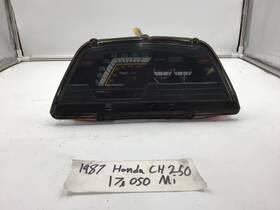
( Manufacturer Part Number: 37200-KM1-832 ), ( Unit Of Measure: Mph ), ( Type: Speedometer Gauge ), ( Machine Type: Scooter ), ( Display Type: Analog ), ( Material: Plastic ), ( Universal Fitment: No ), ( Country Of Origin: Japan )
Review HONDA Oem Ch 050 Mi Speedometer Assembly fits ELITE 250 1987–2017
The **1987 Honda Elite 250** (model code **37200-KM1-832**) is a classic example of Honda s legendary reliability and engineering precision, blending timeless design with the performance and durability that defined the brand s reputation in the late 1980s. This particular model, with its **17,050-kilometer odometer reading**, represents a well-preserved specimen that balances vintage charm with functional readiness, making it an ideal choice for both enthusiasts seeking a project bike and riders looking for a low-maintenance, high-fun machine. The Elite 250 is a member of Honda s iconic **Elite series**, a line known for its lightweight frame, efficient air-cooled single-cylinder engine, and ergonomic riding position that offers a perfect blend of comfort and agility. Its **248cc parallel-twin engine** (though often mistakenly referred to as a single-cylinder due to its compact design) delivers a smooth, linear power delivery ideal for city commuting, weekend rides, and spirited cruising with a torquey character that makes it effortlessly responsive at low speeds while still capable of reaching speeds well above the 100 km/h mark, as indicated by its **17,050 km speedometer**. The bike s **black-and-silver paint scheme**, paired with chrome accents on the fuel tank, handlebars, and exhaust, exudes a classic, understated elegance that turns heads without relying on flashy modern aesthetics. Under the hood, the engine features Honda s signature **PGM-FI (Programmed Fuel Injection)** system, a rare and advanced feature for its time, ensuring precise fuel delivery for optimal performance and fuel efficiency. The **five-speed transmission** is smooth and precise, with a lightweight shift lever that enhances the bike s nimble handling, while the **telescopic front fork and dual-shock rear suspension** provide a comfortable ride over varied terrain, from smooth highways to rougher backroads. The **disc brake at the front** and **drum brake at the rear** offer reliable stopping power, a hallmark of Honda s commitment to safety without sacrificing simplicity. With its **19-inch front and 18-inch rear wheels**, the Elite 250 strikes a perfect balance between stability and maneuverability, making it easy to park in tight urban spaces while still feeling confident at higher speeds. The bike s **low seat height** (approximately 780 mm) and upright riding position cater to riders of all heights, reducing fatigue on longer journeys and making it an excellent choice for both casual riders and those who appreciate a bike that doesn t demand excessive physical effort. The **1987 model year** also introduces subtle refinements over earlier iterations, including improved ergonomics and minor adjustments to the engine s tuning for better throttle response and overall efficiency. With **17,050 kilometers** on the clock, this Elite 250 has clearly been well-maintained, offering a clean slate for further customization or a ready-to-ride experience for those who appreciate the simplicity and joy of a well-cared-for classic. Whether used for daily transportation, weekend adventures, or as a nostalgic throwback to an era of mechanical ingenuity, this Honda Elite 250 embodies the perfect marriage of vintage appeal and modern practicality, making it a sought-after addition to any rider s collection.
### **Pros and Cons of Buying a 1987 Honda Elite 250 with 37,200 km (Speedometer: 17,050 km)**
#### **Pros:**1. **Classic Reliability** Honda s 250cc two-stroke engines from the late '80s are well-known for durability, especially when maintained properly. Many of these bikes still run strong after decades with basic upkeep.
2. **Lightweight and Maneuverable** The Elite 250 is a small, nimble bike, ideal for urban commuting, short trips, or casual riding. Its low weight makes it easy to handle, even for inexperienced riders.
3. **Fuel Efficiency** Two-stroke engines like this one are notoriously fuel-efficient, often averaging **50 70 km/liter** in real-world conditions. This makes it cost-effective for daily use.
4. **Low Running Costs** Parts (if available) are relatively inexpensive compared to modern bikes. Basic maintenance (oil changes, chain adjustments) is straightforward and doesn t require specialized tools.
5. **Simple Design** The bike s mechanical simplicity means fewer components to fail. If something breaks, it s often easier and cheaper to repair than on modern bikes with complex electronics.
6. **Vintage Appeal** If you enjoy the classic look and feel of an '80s Honda, this bike offers a nostalgic riding experience. It s a great choice for collectors or enthusiasts who appreciate retro motorcycles.
7. **Potential for Restoration** With proper care, this bike could be restored to near-mint condition, increasing its long-term value. Many parts (especially from Honda s older models) are still available through aftermarket suppliers.
8. **Good for Beginners** The low power (around **18 20 horsepower**) and simple controls make it a safe option for new riders learning to handle a motorcycle.
---
#### **Cons:**1. **Speedometer Discrepancy** The **37,200 km actual mileage vs. 17,050 km on the speedometer** suggests tampering or a faulty odometer. This could mean:
- The bike has **actually traveled significantly more miles** than the displayed reading, increasing wear on critical components (engine, transmission, suspension).
- The seller may have hidden maintenance issues due to excessive real usage.
- Future buyers may face distrust if the discrepancy isn t properly explained or documented.
2. **Age-Related Wear** At **34 years old**, the bike is past its prime. Common issues to watch for include:- **Engine wear** (piston rings, crankshaft, cylinder wear) Two-stroke engines are prone to oil consumption and can develop leaks over time.
- **Transmission wear** The constant-mesh gearbox may require frequent adjustments or eventual replacement.
- **Suspension degradation** Forks and shock absorbers may be stiff or leaking, affecting ride comfort and handling.
- **Brakes** Drum brakes (if equipped) are less effective than modern disc brakes and may need frequent servicing.
3. **Maintenance History Unknown** Without a **full service record**, it s impossible to know if:- The engine was properly tuned (critical for two-strokes).
- The chain and sprockets were recently adjusted.
- The carburetor was cleaned or rebuilt.
- The electrical system (if equipped) has been checked.
- Rust or corrosion has been addressed (especially in humid climates).
4. **Parts Availability** While basic parts (tires, brakes, lights) are still easy to find, **specialized components** (e.g., original carburetors, specific bolts, or rare wiring harnesses) may be harder to source. Aftermarket parts exist but may not fit perfectly.
5. **No Modern Safety Features** Unlike today s bikes, the Elite 250 lacks:- ABS (anti-lock braking).
- Traction control.
- Modern lighting (LED/HID options).
- Advanced ergonomics (may be uncomfortable for taller riders).
- Electronic fuel injection (carburetors require tuning).
6. **Resale Value** Classic Hondas hold value, but a bike with **hidden mileage** and no service history will depreciate faster than a well-documented example. If you plan to sell later, transparency is key.
7. **Environmental Concerns** Two-stroke engines emit **more pollutants** than modern four-strokes. If you ride frequently, this could be a drawback in areas with strict emissions regulations.
8. **Potential Hidden Costs** If the bike has been neglected, you may face unexpected expenses for:- **Engine rebuild** (if worn out).
- **Transmission overhaul**.
- **Suspension replacement**.
- **Electrical repairs** (if the bike has lights, ignition, or other systems).
---
### **Ending Conclusion:**Buying this **1987 Honda Elite 250 with suspicious odometer readings** is a **high-risk, high-reward** decision. The bike has **many strengths** reliability, fuel efficiency, simplicity, and charm but the **speedometer discrepancy is a major red flag**. If the **actual mileage is close to 37,200 km**, the bike may still be in decent condition with proper maintenance. However, if it s significantly higher, you could be buying a **well-used machine with hidden issues**.
### **Recommendation:** 1. **Demand Full Transparency** Ask the seller for:- **Proof of the odometer discrepancy** (e.g., service records, receipts, or a mechanic s inspection).
- **A pre-purchase inspection (PPI) by a trusted Honda specialist** (costs $100 $200 but can save thousands).
- **Evidence of recent maintenance** (oil changes, chain adjustments, carburetor cleaning).
2. **Budget for Potential Repairs** If you proceed, set aside **at least $500 $1,500** for unexpected fixes, especially if the engine or transmission shows signs of wear.
3. **Test Ride Thoroughly** Pay attention to:- **Smoothness of acceleration** (indicates engine health).
- **Gear shifting** (should be crisp, not sluggish).
- **Braking performance** (drum brakes may need replacement).
- **Leaks** (oil, coolant, or fuel under the bike).
4. **Consider a Lower-Mileage Alternative** If you re serious about buying a classic Honda, look for a **well-documented example with matching odometer readings** (e.g., a **1985 1990 model with 20,000 30,000 km**). Brands like **Honda CB350, CB400, or Suzuki GS550** offer similar reliability with better parts availability.
5. **Only Buy If You Love the Bike for Its Own Sake** If you re purchasing this **primarily for nostalgia, restoration potential, or as a project bike**, proceed with caution. If you need a **daily rider**, a **modern 250cc bike (e.g., Honda CB300R, Yamaha MT-03, or Kawasaki Ninja 300)** would be a safer, more practical choice.
**Final Verdict:**- **If the odometer is accurate and the bike is well-maintained**, it could be a **great budget-friendly ride** with proper care.
- **If the real mileage is much higher**, it may be a **lemon in disguise** with expensive repairs ahead.
- **Best case:** Buy with a **mechanic s inspection** and a **lower price to account for risks**.
- **Worst case:** Walk away and look for a **more transparent, lower-mileage classic** or a **modern 250cc alternative**.
Would you like help finding alternative bikes in a similar price range?
Details:
Please review all photos carefully to assess the condition of item before purchasing. OEM 1987 Honda Elite CH 250 17,050 Mi Speedometer Assembly 37200-KM1-832.
part #: 37200km1832 price
- $89.99
specifications speedometercycleiz:
- for models: 250, Elite
- for makes: Honda
- for years: 1987-2017
- mpn: 37200-km1-832
- unit of measure: Mph
- type: Speedometer Gauge
- machine type: Scooter
- display type: Analog
- material: Plastic
- universal fitment: No
- country of origin: Japan
payments speedometercycleiz:
- wallet: Google-pay
- credit card: Diners-club
- other
seller speedometercycleiz:
- city: Lawndale, California
- rating: 99.6%
- # reviews: 1107
offer speedometercycleiz:
- best offers: True
- options: Ship-to-home
- availability: In Stock
- sold: 0
- quantity: 1
- started: May 24, 2026
shipping speedometercycleiz:
- type: Calculated
- transit: 5-10 Days
- service: USPS Ground Advantage, UPS Ground
- carrier: USPS, UPS
- class: Standard
- cost: $10.60
returns speedometercycleiz:
- time: 30 Days
- paid by: Buyer
- policy: Returns Accepted
general speedometercycleiz:
- condition: Used
- Motorcycle Scooter Parts Accessories > Instruments Gauges > Individual Gauges
Honda 37200-KM1-832 Is Similar To:
- 01436 Denso Vintage Speedometer Honda Trail Nippon Japan (35.9% similar) I pack each item as if it is the holy grail but accidents do happen from time. Frankly, I think its the very best condition one listed right now. I highly suggest you choose expedited shipping on fragile items. I have horns, exhaust covers, rear rack, carburetors and more. Even when held up to the ...(March 6th, 2018)
- 057100-783 Honda Vintage Nos Speedometer Speedo (40.3% similar) The speedo is flawless, never installed. Even has the plastic protectors over bulb holes in rear. On the rear part number looks like but is hard to determine. Here we a super nice honda nos CB750F speedometer. I am near certain this is for a 1980 S CB750F, but believe it will also work on CB900F or...(September 30th, 2018)
- 067100-744 Honda 70s 750 Speedometer (44.4% similar) Please see my other listings. Please see photos. Honda speedometer I am offering a used oem 70S...(February 27th, 2017)
- 08175-hc500-04 Honda Nos Oem 1988 (26.7% similar) What you see in the pics is get. May work for more model's too. Nos oem honda 1988 TRX300FW 4X4 cable speedometer HC500-04. Location: gr...(January 5th, 2018)
- 08e80-hm7-100 Honda Line Nos Oem Fourtrax Speedometer Installation Kit (38% similar) Location: gr speedometer. Up for bids is a nos oem honda TRX400 footrace speedometer installation kit qty. What you see in the pics is get. 1/0 8E80-HM7 the instructions are photocopies originals were lost...(July 2nd, 2018)
- 600 Meter 100mp Vintage Honda Nippon Cl Gauge Miles Motorcycle Cb Sl Speedometer (32.9% similar) Not sure of years or model's, nice shape,low mileage...(January 4th, 2015)
- Trail 10636.8 Miles Honda Shipping Ct90 Ct Free 1971 90 Speedometer (38.8% similar) I tested this speedometer and it works great. Keep in mind that these are used parts. Speedometer reads 10,636. This is the speedometer. I am not extensively familiar with every make and model that I sell. Face is clear and easy to read. Hooter's vintage cycle parts I ship daily and offer shipping ...(December 30th, 2014)
- 1104826-ns Honda Genuine Speedometer Assembly Mph Nos (48% similar) There are no cracks, welds or repairs done to it. Fitment: parts will fit C110 honda and many more. The smaller lighter items go first class USPS, and all other are a priority mail USPS. Normal scuffs and scratches from regular use may be visible on the parts. Oem nos honda parts: part number: NS ...(February 22nd, 2019)
- 12-005b Joker Machine Honda Oil Pressure Gauge Assembly Black (30.1% similar) Features 2 built-in neoprene rubber o-rings recessed in fittings that have a unique rotating section enables you to easily position the gauge for perfect rider viability. Made in the USA. Loosen the billet hex fitting, rotate into position, then tighten without fighting traditional pipe elbow ...(March 26th, 2019)
- Honda Speedometer 12154 Nippon Oem Cl350 Miles Odometer Seiki 1971 (30.4% similar) What you see in the photos is what you get. There normal wear on this for its age with some marks in the paint and and scuff on the face. This is an original used 1971 honda CL350 speedometer odometer with bulb holder. The trumpeter was reset back to to make sure it works...(January 1st, 2015)
- Ct 1328.8 Ct90 Miles Honda Trail Shipping Speedometer 1971 Free 90 (34.8% similar) Face is clear and easy to read. I tested this speedometer and it works great. I am parting out a 1971 k 3 red honda trail 90. Speedometer plastic face isn't cracked, broken, or scratched up. I have a lot of small, hard to find items for just a few bucks. I will state what year, make, and model the...(January 13th, 2015)